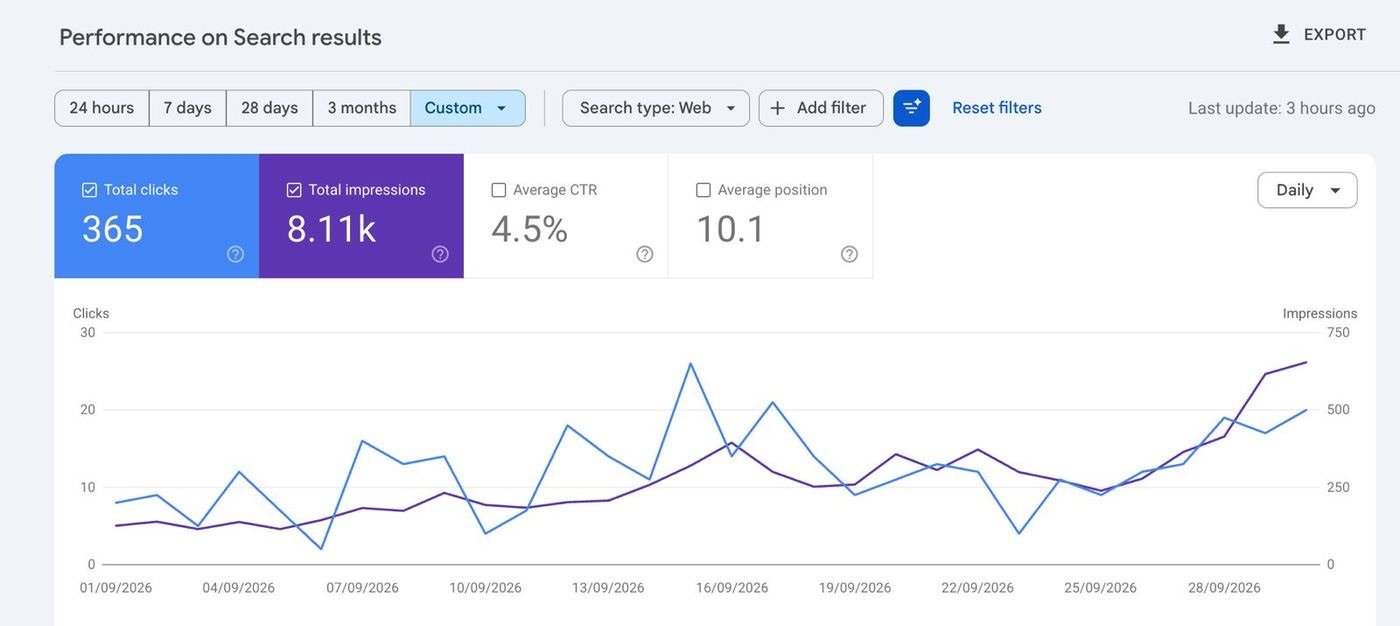
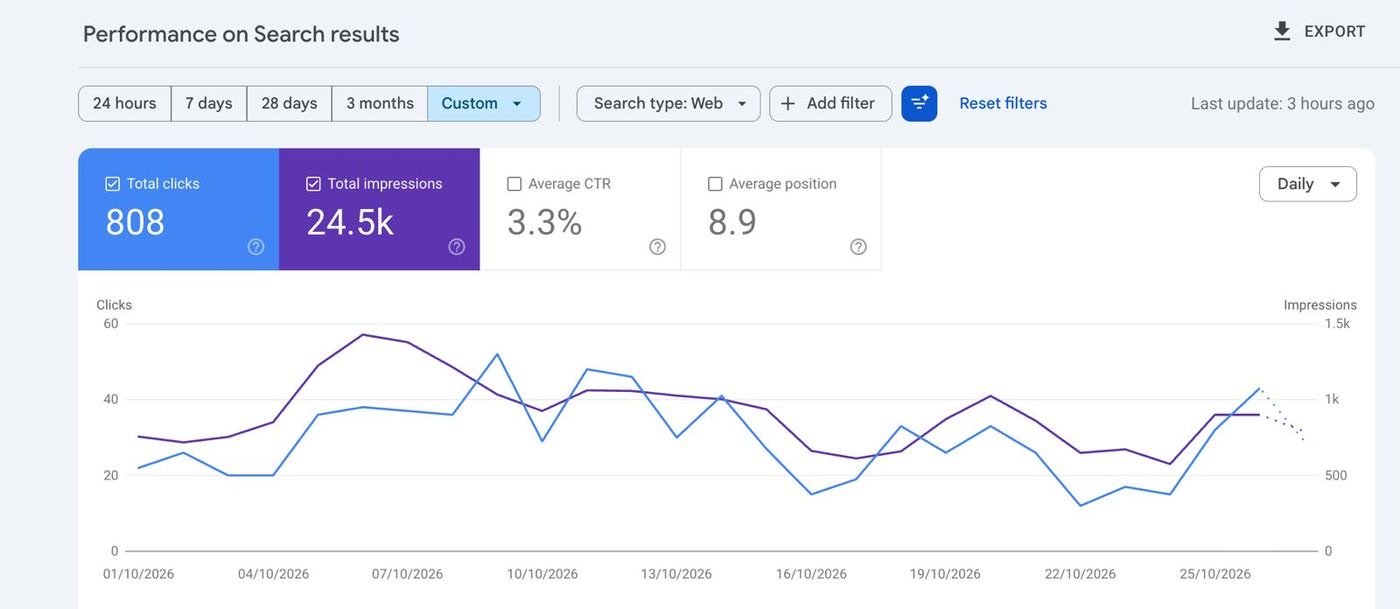
Almost every order this store wins starts with a Google search. Paid ads are tightly restricted for research peptides, so organic search carries the growth, and every page has to stay compliant while it climbs. In September, the site earned 365 clicks from Google. By October 27, with four days of the month still to run, it had 808.
This case study walks through what we shipped, the numbers that moved, and the live search results that prove it. Client names, domains and brand marks are hidden in every screenshot to protect the client's privacy.
| At a glance | |
|---|---|
| Client | Research peptide store (name withheld) |
| Period | September vs October 1 to 27, 2026 |
| Services | Compliant site build, product copy, blog content, guest posts, email flows |
| Google clicks | 365 → 808 (+121%) |
| Google impressions | 8.11k → 24.5k (+202%) |
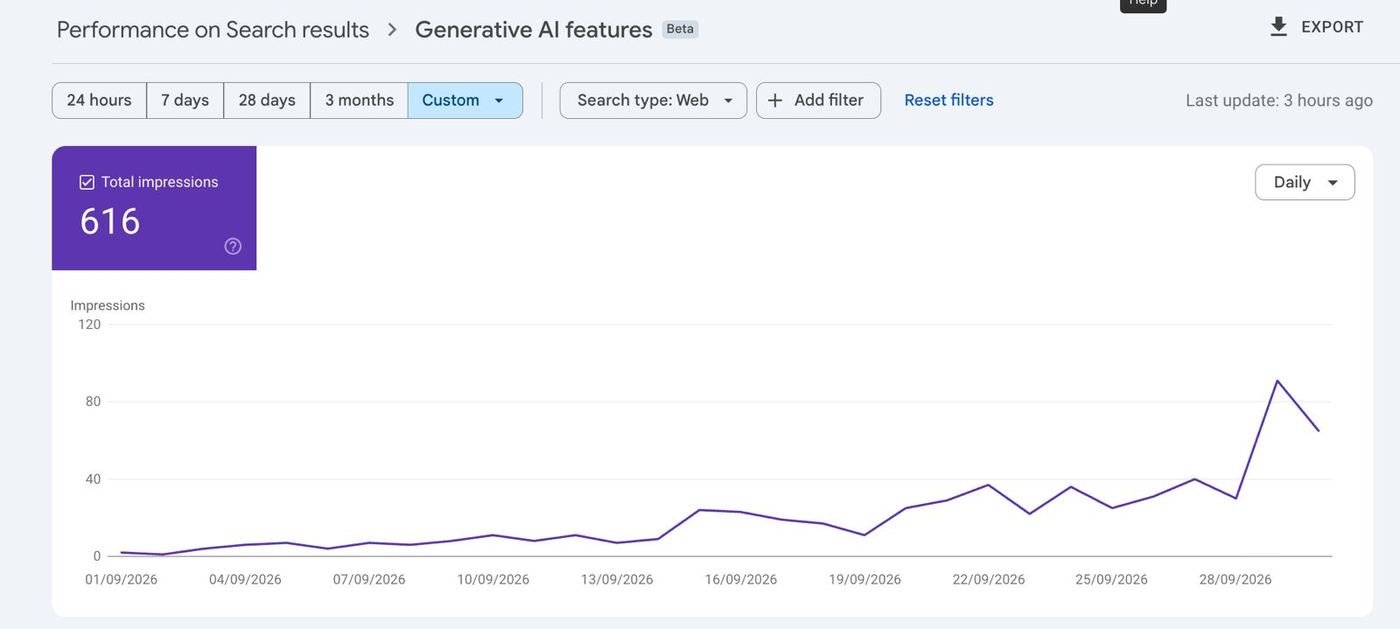
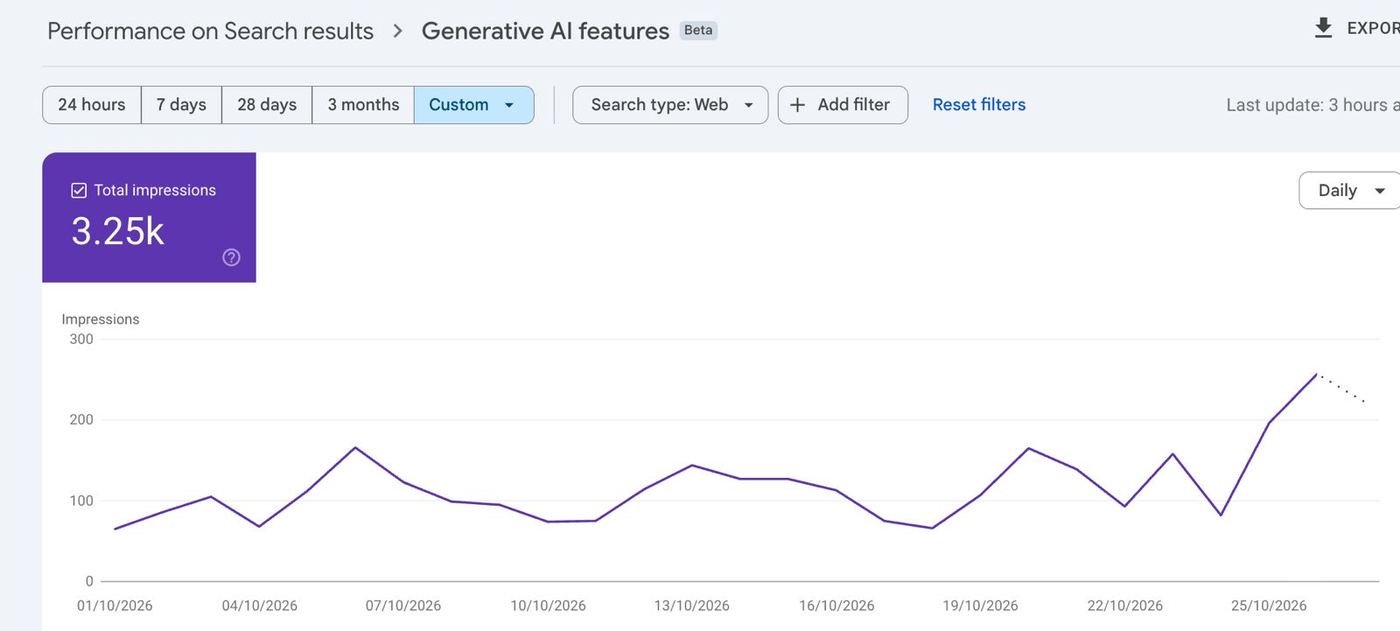
| AI feature impressions | 616 → 3,250 (+428%) |
| Average position | 10.1 → 8.9 |
Where the Store Started
The store already had a base to build on. It averaged position 10.1 in September, and active users were already up 33% on August as the first changes went live. The harder problems were specific to this niche:
- Compliance on every line. A research-use store can't make health claims, dosing suggestions or outcome promises. Payment providers and Google both read the copy.
- A tiny domain. Even in late October, Ahrefs rated the site's authority at 0.4 out of 100. Most competitors have years of links behind them.
- Cautious buyers. Researchers want proof of testing, clear storage guidance and fair policies before they place an order.
- Product pages with two jobs. Each compound needed copy a research buyer could use, written in compliant language.
What Our Initial Audit Found
Our first pass over the site turned up seven gaps:
- No trust-building pages. Nothing on the site showed a buyer how products were tested, stored or shipped, or what the store's policies were.
- A homepage that was only a product list. The catalogue filled the page, with nothing to tell a first-time visitor who the store was or why to order from it.
- No internal linking. Pages didn't point to each other, so buyers and Google had no path from a guide to the product it covered.
- No blogs aimed at the right keywords. The blog wasn't built around the searches researchers actually type.
- No email marketing. A visitor who left without buying never heard from the store again.
- No off-site presence. Almost no other sites mentioned or linked to the store.
- Thin, non-compliant pages. Several pages had little content, and some wording could read as a health claim, which research-use rules don't allow.
What We Delivered
Every number below comes from our delivery tracker for this client.
| Deliverable | September | October 1 to 27 | Total |
|---|---|---|---|
| New blog posts published | 5 | 12 | 17 |
| Existing posts refreshed | 2 | 2 | 4 |
| Product pages rewritten | Across Sep to Oct | 29 | |
| Core and trust pages written | Across Sep to Oct | 9 | |
| Guest posts live (paid for independently by the client) | Across Sep to Oct | 5 | |
| Automated email flows live | 0 | 4 | 4 (15 emails) |
Nine Core Pages, Written for Compliance
We rebuilt the homepage and wrote eight new pages: About, Quality Standards, Certificates of Analysis, FAQs, Returns, Storage and Handling, and Shipping. Each one answers a question a cautious buyer asks before checking out, in language that keeps the store on the right side of research-use rules.
Product Copy for All 29 Products
Every product page got research-focused copy: what the compound is, how it's supplied, how to store it and what documentation comes with it. Where a page was missing a topic buyers search for, we added a section to cover it. This is standard ecommerce SEO work, done with a compliance filter on every sentence.
Three Blog Posts a Week
Seventeen new posts went live between September 19 and October 27, about three a week through October. Each one targets a search with real volume and opens with a direct answer Google can quote. We also refreshed four posts, including the supplier guide that now ranks second for its main search.
Guest Posts and Email
Five guest posts went live on outside sites, paid for independently by the client. On October 12, four automated email flows went live (4 sequences, 15 emails in all) to bring new organic visitors back to buy.
The Results
Clicks more than doubled and impressions tripled between September and the first 27 days of October.
| Metric (Google Search Console) | September | October 1 to 27 | Change |
|---|---|---|---|
| Clicks | 365 | 808 | +121% |
| Impressions | 8.11k | 24.5k | +202% |
| Average position | 10.1 | 8.9 | 1.2 places higher |
| Click-through rate | 4.5% | 3.3% | see note |
The click-through rate dipped because the site now appears for three times as many searches, many of them broad. More impressions pull the percentage down, while real clicks still rose from 365 to 808.
The Pages Pulling in Traffic
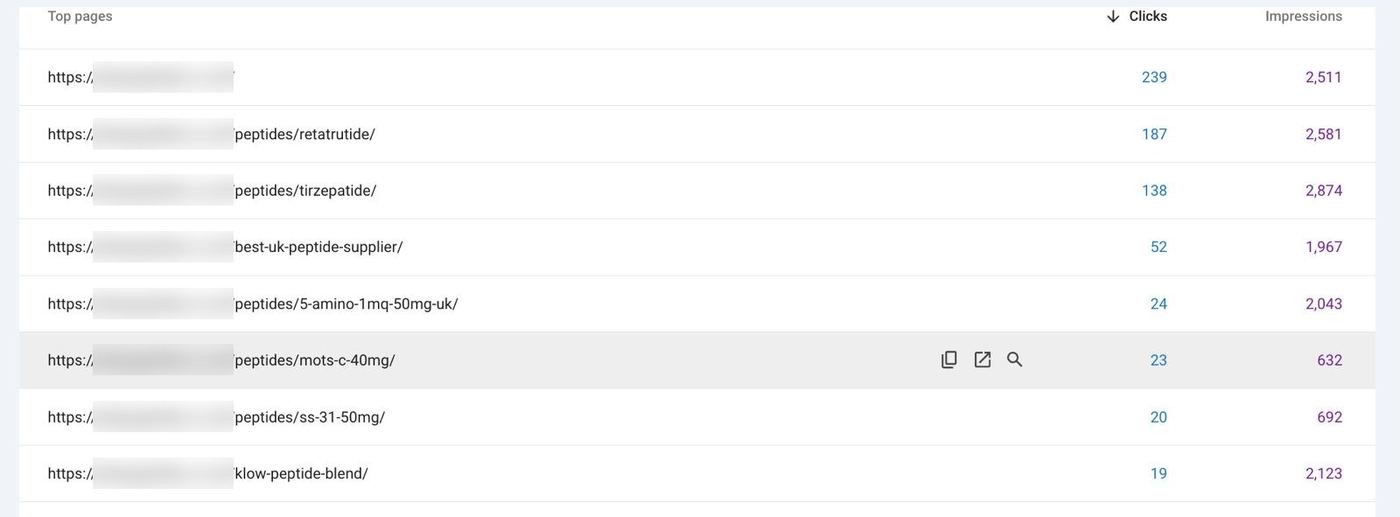
Six of the site's top eight pages by clicks are product pages we rewrote, led by two products at 187 and 138 clicks. The homepage alone drew 239 clicks in October.
Google's AI Features
Answer-first writing paid off in Google's AI Overviews and AI Mode. Impressions from these features rose from 616 in September to 3,250 in October.
Proof in Live Search Results
These screenshots show where the client's pages appear when a buyer searches.
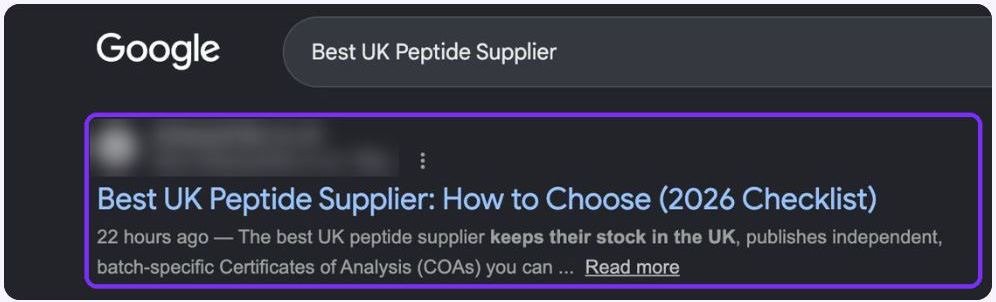
Position 2 for "Best UK Peptide Supplier"
The store's supplier checklist, published September 30 and refreshed October 24, ranks second for one of the most commercial searches in the niche.
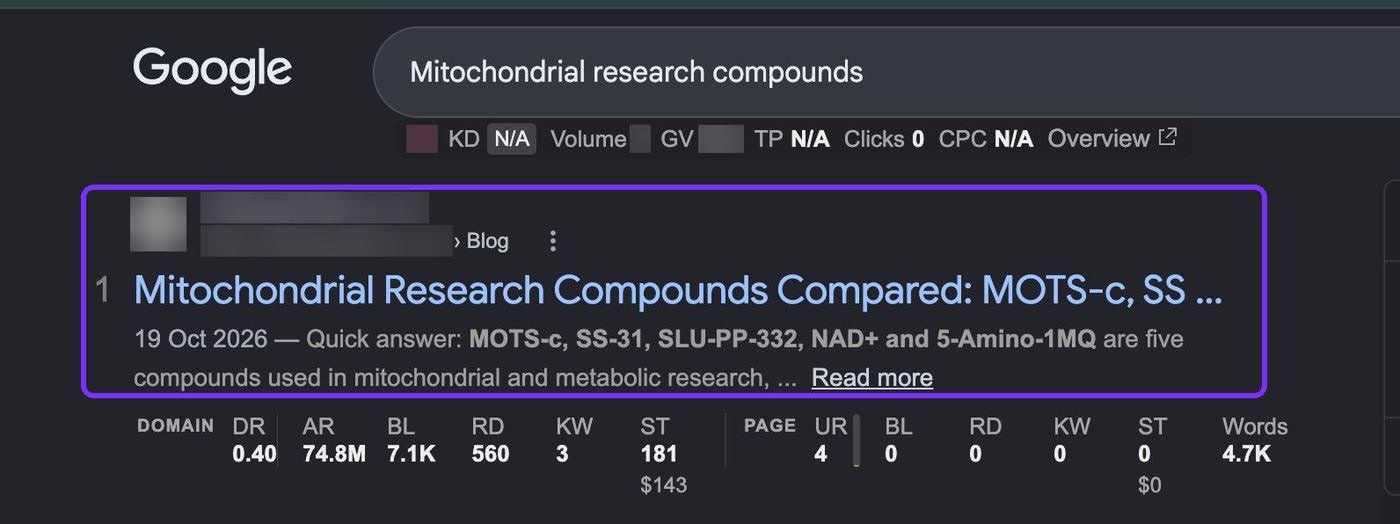
Number 1 for "Mitochondrial Research Compounds"
This comparison post went live on October 19 and took the top spot within days.
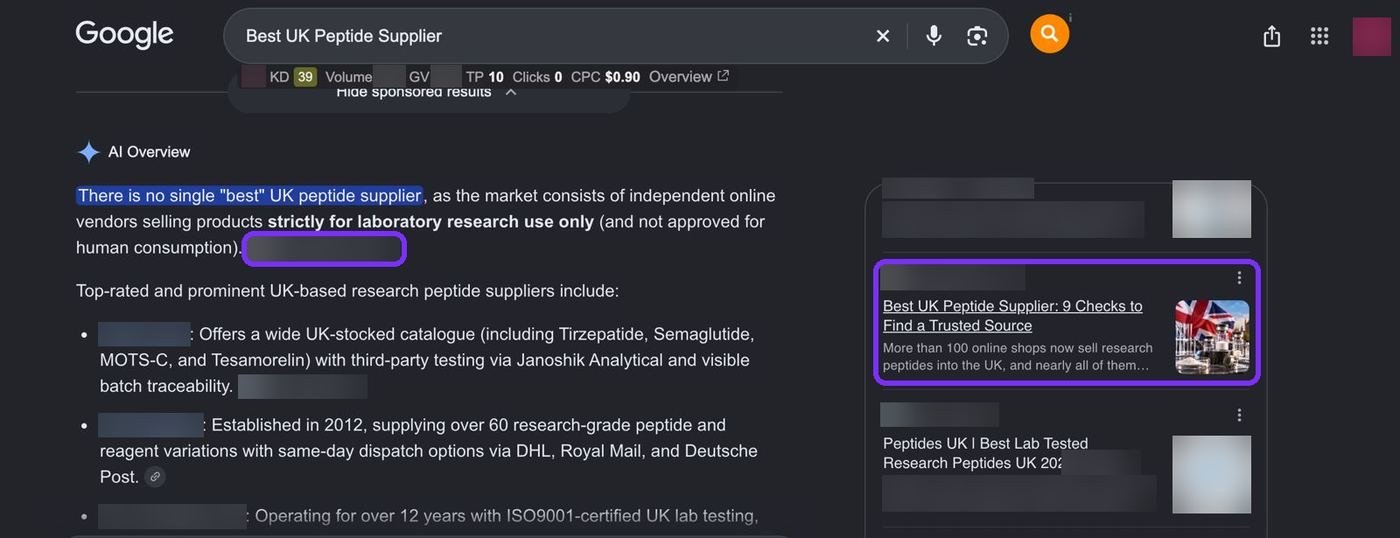
Cited in Google's AI Overview
For "best UK peptide supplier", Google's AI Overview quotes the client's guide in its answer and lists it in the sources panel. This is the kind of citation our AI Overviews optimization work aims for.
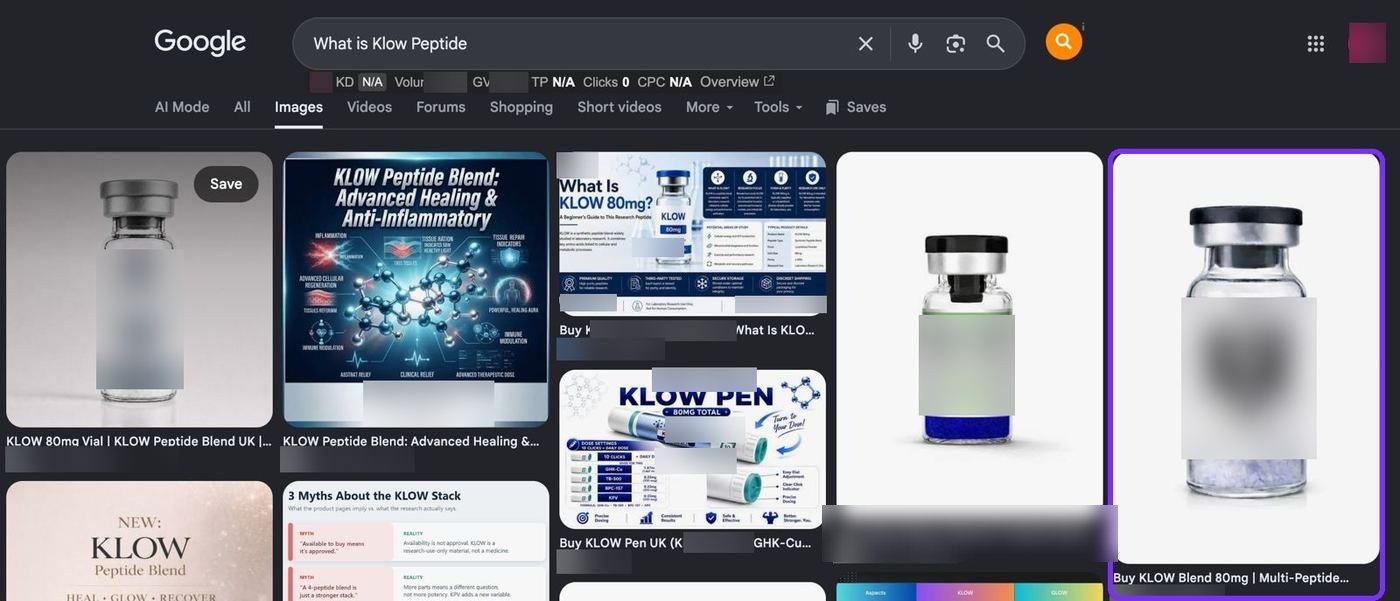
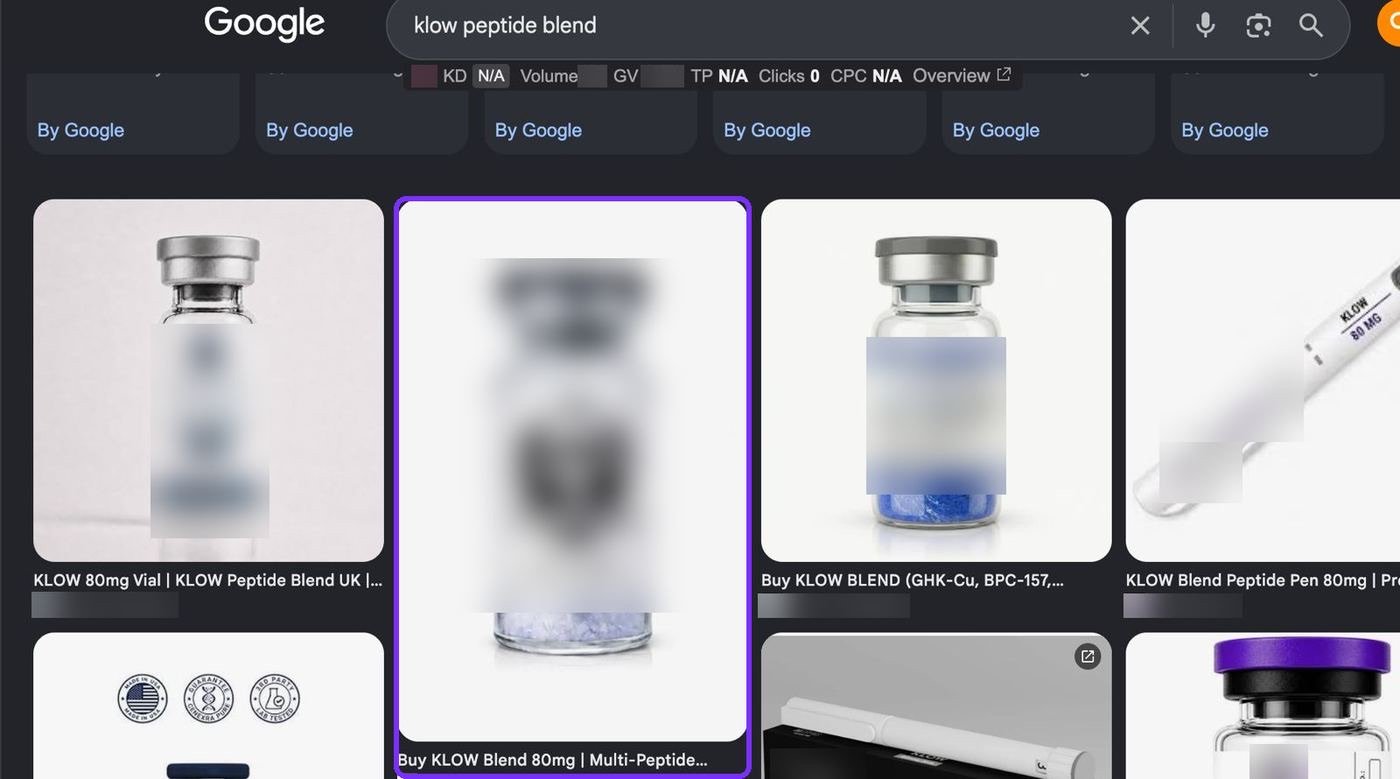
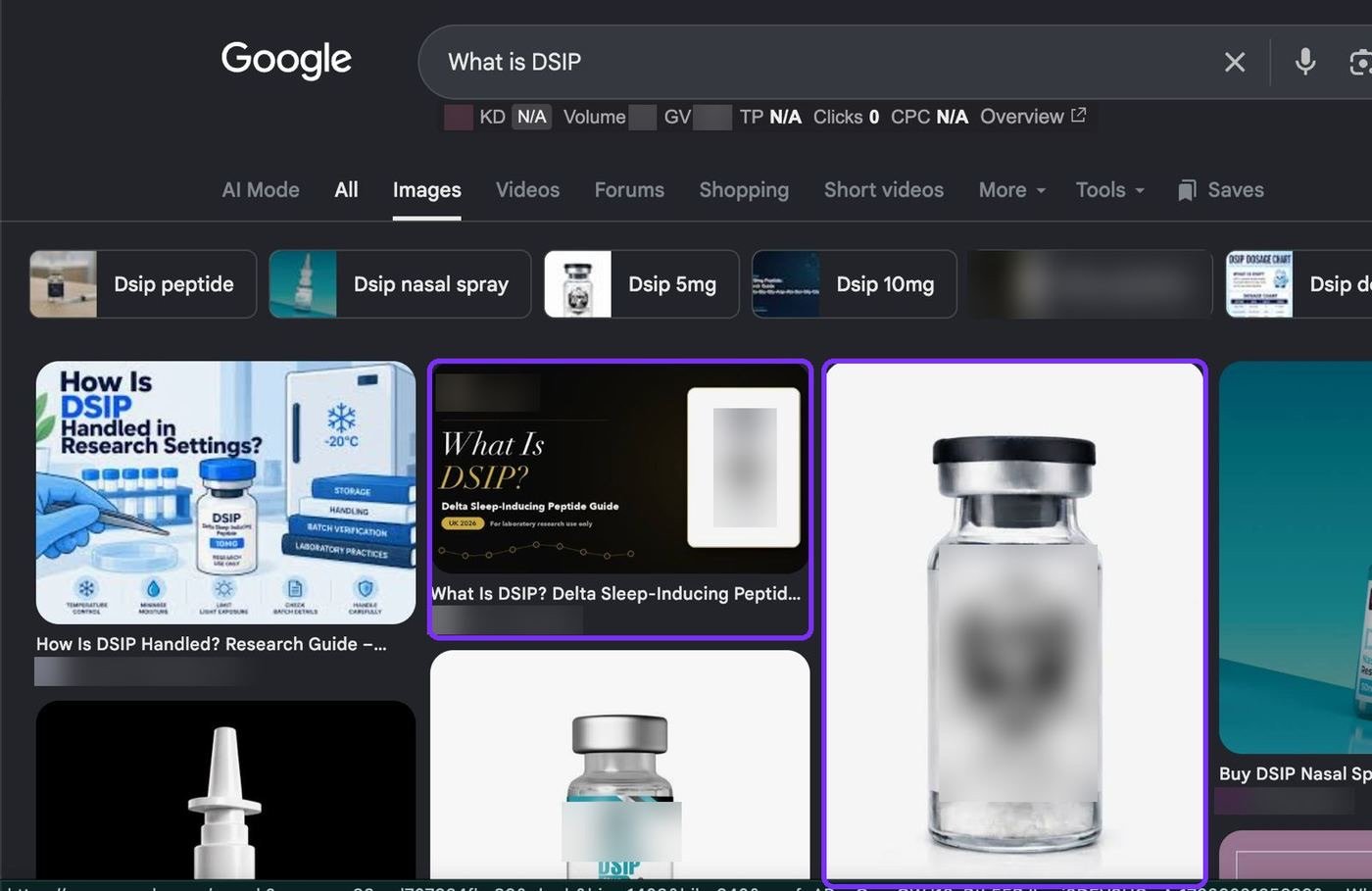
On the First Screen of Google Images
Product photos and blog graphics now show up where buyers browse visually.
What the Client Says
"We'd posted blogs before and nothing really moved. A month in, our guides were on page one and turning up in Google's AI answers. We can finally see the work paying off."
— Founder
What's Next
- Keep publishing three to four posts a week on searches buyers use.
- Refresh posts as they reach page one, so they can climb into the top three.
- Push the product pages already in the top ten toward positions one to three.
- Earn more AI Overview citations on supplier and comparison searches.
October figures cover October 1 to 27, 2026. Data comes from Google Search Console and Google Analytics 4.
Want Results Like These for Your Store?
We'll look at where your site ranks today and show you the fastest wins.
Book a free growth review